

Key takeaways
What you’ll get from this article
- **$10,000 CAD is the line.** Any amount equal to or above this — in any currency, in any form — must be declared when you enter Canada.
- **The limit is per person, per trip, combined.** A family travelling together can’t split cash to dodge the rule.
- **Not declaring isn’t a fine — it’s seizure.** Customs can take the entire amount, and getting it back is slow and expensive.
- **There is no tax on bringing legal money in.** Declaring is paperwork, not a penalty.
- **Wire transfers, Wise, and bank drafts are the modern way.** They create the paper trail Canadian banks need before they’ll trust you with a large deposit.
A lot of newcomers land at Pearson or YVR with an envelope of cash tucked into a jacket pocket. Sometimes it’s a few thousand dollars for first month’s rent. Sometimes it’s a life savings — the family’s entire move, in U.S. hundreds, wrapped in a plastic bag inside a carry-on.
I understand why. For our parents’ generation, cash was the only thing you could trust. You watched it go into the bag. You watched it come out. No bank could freeze it. No government could see it. After what some of our families lived through, that instinct wasn’t paranoia — it was experience.
But the rules in Canada changed a long time ago, and they keep getting stricter. If you’re planning your move in 2026 the way your uncle planned his in 1985, you’re going to have a very bad day at the border.
Here’s what the rules actually say, in plain language. No legal jargon. Just the truth, so you can plan around it.
The $10,000 rule, in one sentence
If you bring $10,000 CAD or more into Canada in cash or cash-like instruments, you must declare it to the Canada Border Services Agency (CBSA) when you arrive.
That’s the whole rule. It’s been the law since 2003, and it’s enforced under something called the Proceeds of Crime (Money Laundering) and Terrorist Financing Act. Most people just call it AML — anti-money-laundering.
A few things to understand about how it works:
- It’s $10,000 in any currency, converted to Canadian dollars. So $8,000 USD is roughly $11,000 CAD — that crosses the line. (verify with current exchange rates before you travel)
- It includes more than just cash. Bank drafts, money orders, traveller’s cheques, and bearer bonds all count.
- It applies per traveller, but families count together. Mom carrying $6,000 and Dad carrying $5,000 is still $11,000 walking through customs as one family.
- It applies whether you bring it in or take it out. Leaving Canada with $10,000 or more also requires a declaration.
And here’s the part people miss: declaring is free. There’s no tax. No fee. No penalty for the money itself. It’s just paperwork. You walk up to the customs officer, you say “I have cash to declare,” they hand you a form (E677), you fill it out, and you walk through with your money.
The whole thing takes maybe twenty minutes if you have your documents in order.
Why does Canada care?
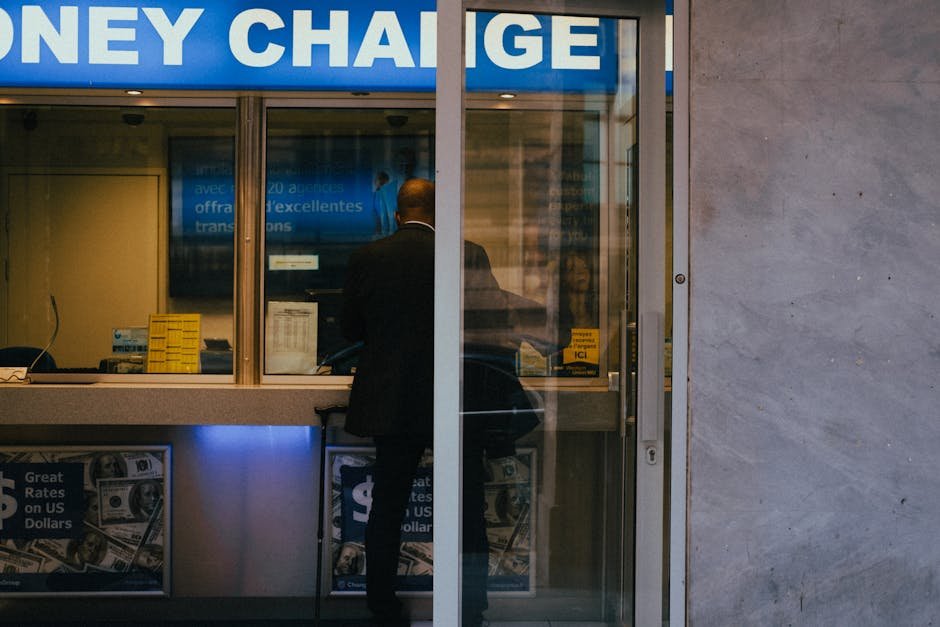
The honest answer: criminals used to move large amounts of cash across borders to launder money, and Canada — along with most other developed countries — agreed to track it.
The declaration doesn’t accuse you of anything. It just creates a record. If you later try to deposit that money in a Canadian bank, the bank can match the deposit to your declaration and confirm the money entered the country legally.
That paper trail matters more than most newcomers realize. Without it, your Canadian bank may freeze a large deposit, ask uncomfortable questions, or in some cases close your account. Banks are required by law to flag deposits they can’t explain.
So the declaration isn’t just protecting Canada from criminals. It’s also protecting you — it’s the proof that says “this money is mine, and I brought it in the right way.”
What happens if you don’t declare
This is where it gets painful. If CBSA finds undeclared cash at or above the limit, they don’t just give you a warning. They seize the entire amount.
All of it. Even if every dollar is from a legitimate source. Even if you saved for twenty years. Even if it’s your family’s entire life savings.
To get it back, you have to:
- Prove the money came from a legal source (bank statements, sale documents, tax records from your home country)
- File a formal request for review with CBSA
- Pay a penalty — typically $250 to $5,000, depending on the circumstances
- Wait. Often months. Sometimes longer if your documents need to be translated and verified.
And if CBSA suspects the money came from crime, they don’t have to return it at all. You’d be looking at a court case in a country where you just arrived, in a language you may not speak fluently, with a lawyer you have to pay out of pocket.
The declaration takes twenty minutes. Fighting a seizure takes months and thousands of dollars in legal fees. The math is not close.
The “split it up” trick — don’t
Some families try to be clever. Four people travelling together, each carrying $4,000. No single person hits $10,000, so no declaration, right?
Wrong, and also illegal. CBSA looks at the combined amount for groups travelling together — family or otherwise. And deliberately splitting a sum to stay under the limit is called structuring. It’s a separate offence, and it can lead to criminal charges, not just seizure.
If your family is bringing $20,000 together, one person declares the $20,000. That’s it. The form has space for it. The officer has seen it a thousand times before.
The modern way: don’t carry the cash at all
Here’s what most newcomers in 2026 actually do — and what I’d recommend to anyone planning a move:
1. Open a Canadian bank account before you arrive
Most of the big Canadian banks have newcomer programs that let you start an account from overseas, before you’ve even booked your flight. Scotiabank’s StartRight, RBC Newcomer Advantage, and similar programs at TD and CIBC are designed for this. You arrive, you visit the branch with your documents, and the account is ready.
2. Wire your savings before or after you land
An international wire from your home bank to your new Canadian account is the standard route. It’s not free — most banks charge $30 to $80 per wire, plus a currency conversion spread that can quietly cost you 2-3% — but it creates a clean record that the Canadian side can verify.
For amounts under about $50,000, services like Wise often beat the banks on exchange rates by a significant margin. The transfer arrives in a few days, the rate is close to what you see on Google, and it shows up in your Canadian account as a clean, traceable deposit.
3. For very large sums, use a bank draft
A bank draft is basically a guaranteed cheque issued by your home bank, payable to you. You can carry it on the plane — it still counts toward the $10,000 declaration rule, but it’s much safer than cash. If you lose it, the bank can cancel it and issue a new one. If you lose cash, it’s gone.
This is the route I’d suggest for older parents who still don’t fully trust electronic transfers. The draft feels like cash to them, but it behaves like a paper trail to the bank.
What about gold and jewelry?
This comes up a lot in our community. Mom’s wedding gold. The 24-karat chains saved over decades. The lì xì gold from every Lunar New Year for thirty years.
The short answer: gold and jewelry generally don’t count as “cash” under the $10,000 rule. You don’t have to declare them the same way.
But — and this matters — high-value goods may need to be declared on a different customs form, especially if you’re moving them permanently. And if a customs officer thinks the jewelry is actually being used as a workaround for the cash rule, they can ask questions. Bring receipts if you have them. Wear the gold rather than packing it in a bag.
If you’re moving significant gold holdings — more than personal jewelry, into investment-grade territory — talk to a customs broker before you fly. The rules around precious metals are their own world.
The part that’s hard to accept
Our parents trusted cash because they had to. The systems they came from — banks that collapsed, governments that froze accounts, currencies that lost half their value overnight — taught them that paper money in your own hand was the only safe form of wealth.
Canada is different. Not perfect, but different. Banks here are insured by CDIC up to $100,000 per eligible deposit category at each member institution (as of 2026, verify at cdic.ca). The currency is stable. The government doesn’t seize personal savings.
The risk in Canada isn’t the bank failing or the government taking your money. The risk is a house fire, a break-in, or inflation slowly eating your savings while they sit unused. And the irony is this: the same paper trail our parents wanted to avoid is now the thing that protects them. A wire transfer that’s documented can’t be lost, stolen, or burned. A declared cash entry at the border can’t be seized.
The system isn’t perfect. But the rules aren’t designed to catch you. They’re designed to catch the bad actors who use unmarked cash to move dirty money. If you declare what you bring, if you wire what you can, if you keep your receipts — you’ll be fine.
A simple checklist before you fly
- If you must carry $10,000 CAD or more, plan to declare it at customs. Bring your E677 form filled out in advance if possible.
- Bring documents that prove where the money came from: bank statements from your home country, sale documents (if you sold a house or business), tax records, inheritance papers.
- If you can, wire the money instead. Open your Canadian account first, then transfer.
- For amounts under $50,000, compare your bank’s wire rate against a service like Wise. The savings on exchange rates can be significant.
- Don’t split the cash among family members to avoid declaring. It’s illegal and CBSA knows the trick.
- If you’re nervous about the process, ask. Customs officers handle this every day. They’re not trying to trap you — they’re trying to keep a record.
The instinct to bring cash made sense once. Our parents earned it the hard way. But the world your family is moving into now runs on records — and the good news is, those records can work in your favour if you set them up right.
Declare what you bring. Wire what you can. Keep your paperwork. That’s the new playbook, and honestly, it’s a lot less stressful than spending twenty hours on a plane with a life savings strapped to your chest.
FAQ
Frequently asked questions
Is bringing cash to Canada illegal?
No. You can legally bring any amount of cash into Canada. You just have to declare it if it’s $10,000 CAD or more. The declaration is free and there’s no tax — it’s just a record.
What counts toward the $10,000 limit?
Cash in any currency (converted to CAD), traveller’s cheques, money orders, bank drafts, and stocks or bonds in bearer form. Gold and jewelry generally don’t count as ‘cash,’ but high-value items may need to be declared separately for customs purposes.
What happens if customs finds undeclared cash?
They can seize all of it. To get it back, you have to prove the money came from a legal source and pay a penalty (often $250–$5,000 depending on the situation). The process takes months and usually needs a lawyer.
Can my family split the cash so each person carries under $10,000?
No. CBSA treats money travelling with a family or group as combined. If the total is $10,000 or more, someone in the group has to declare it. Splitting on purpose to avoid the rule is called ‘structuring’ and it’s a separate offence.
What's the best way to move large savings to Canada instead?
For most newcomers, an international wire from your home bank to your new Canadian account is the standard option. Wise and similar services often have better exchange rates for amounts under $50,000. For very large sums, your Canadian bank can help arrange the transfer and the documentation.
Related articles
Home Inspection in Canada (2026): What to Expect + Red Flags
Home inspection in Canada — finding a licensed inspector, what they check (and don't), reading the report, deal-breaker red flags,…
Tangerine Bank Review (2026): Canada’s Original Online Bank, Honestly
Honest 2026 review of Tangerine — no-fee chequing, high-interest promo rates, Money-Back Credit Card, and the limits of being a…
Segregated Funds in Canada: When They’re Worth It (And When They’re Not)
A balanced look at segregated funds in Canada — death-benefit guarantees, creditor protection, estate bypass, vs the higher MERs. When…