

Key takeaways
What you’ll get from this article
- **A power of attorney (POA) is a legal document** that lets someone you trust make decisions for you if you can’t make them yourself.
- **There are two kinds in Canada:** one for money and property, one for personal and health care. Most families need both.
- **It only works while you’re alive.** When someone passes, the POA ends and a will takes over.
- **It must be signed before a crisis.** Once a person loses capacity, it’s too late — the family has to go to court instead.
- **Rules differ by province.** Same idea everywhere, but the forms, names, and witness rules change depending on where you live.
A lot of our parents don’t want to talk about this. I get it. In Cantonese households especially, you don’t bring up sickness or death at the kitchen table — it feels like inviting bad luck in through the front door. So the paperwork never gets done. The conversation never happens. And then one day someone has a stroke, or a fall, or a diagnosis, and the family is standing in a hospital hallway realizing nobody can sign anything on Mom’s behalf.
This is the article I wish someone had handed me ten years ago. It’s about a piece of paper called a power of attorney — what it is, the two kinds you need to know about, and why our parents really should have one signed before anything happens. Not after.
What a power of attorney actually is
A power of attorney — most people just say “POA” — is a legal document. In it, one person (your parent, let’s say) names another person (you, or a sibling, or anyone they trust) to make decisions for them if they can’t make those decisions themselves.
The simplest way I’ve explained this to my own family: it’s like giving someone a spare key, but for your life. They don’t use the key while you’re fine. But if you’re in a coma, or your memory is fading, or you’re stuck overseas and can’t get to the bank — someone you trust can step in and handle things.
Here’s the part our parents need to hear clearly: a power of attorney only works while the person is alive. The moment someone passes away, the POA ends. From that point on, the will takes over. So a POA and a will are not the same thing. They cover two different moments. You need both.
The two kinds you need to know about
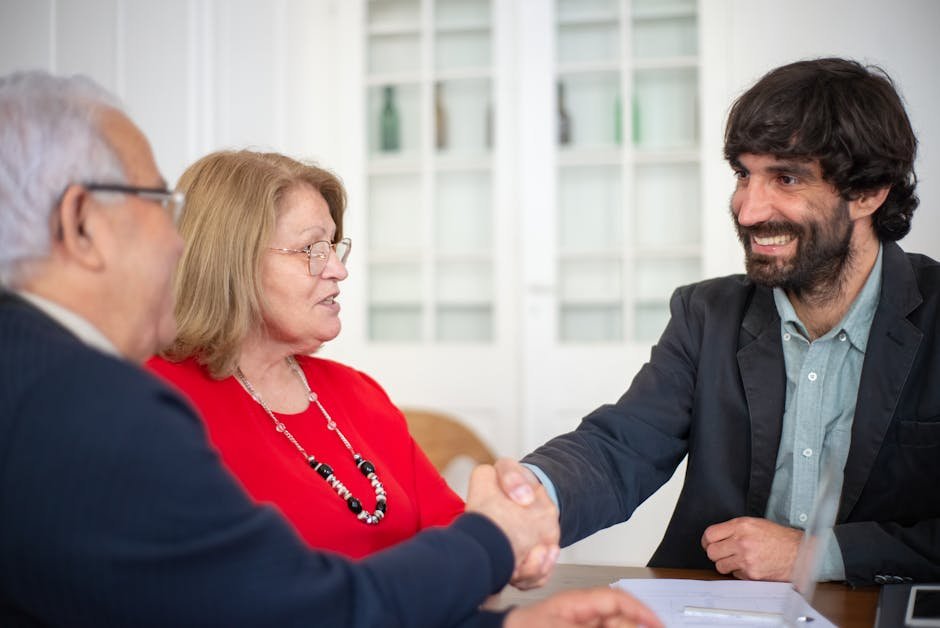
In Canada, there are basically two types of POA. The names change by province, but the idea is the same everywhere.
1. POA for money and property
This one covers anything financial. Paying bills. Managing the bank account. Selling a house. Filing taxes. Cashing a pension cheque. Dealing with CRA. Talking to the bank when something gets flagged.
In Ontario it’s called a Continuing Power of Attorney for Property. In BC it’s an Enduring Power of Attorney. In Quebec it’s a Protection Mandate. Different names, same job.
The word “continuing” or “enduring” matters. It means the document keeps working even after the person loses mental capacity. A regular POA stops working the moment someone becomes unable to make decisions — which is exactly the moment you need it most. So make sure the document says continuing or enduring.
2. POA for personal and health care
This one is different. It covers medical decisions and personal care. What treatment to accept or refuse. Whether to be on life support. Where to live (home, with a child, in a care facility). What kind of end-of-life care to receive.
In Ontario it’s called a Power of Attorney for Personal Care. In BC, a Representation Agreement. In Alberta, a Personal Directive.
This is the one our parents often don’t think about, because money feels like the obvious thing to plan for. But the hardest conversations in a hospital aren’t about money. They’re about whether to keep someone on a ventilator. Whether to do surgery on an 80-year-old with a weak heart. Whether to bring Mom home or move her into long-term care. Without a personal care POA, doctors will ask the next of kin — and if the family disagrees, things get ugly fast.
Why “before a crisis” is the whole point
Here’s the rule that catches every family off guard: you can only sign a POA while you still have mental capacity. Meaning, you understand what you’re signing and what it means.
Once someone loses capacity — dementia, severe stroke, advanced illness — it is too late. The window has closed. They can no longer sign one. And now the family has to go to court.
That court process is called applying for guardianship (or in some provinces, committeeship). It is slow. It is expensive. It is paperwork-heavy. While it’s happening — which can take months — the bank often freezes the account. Bills don’t get paid. The mortgage payment bounces. Auntie can’t access the money to buy groceries for Mom. The whole family is stuck.
I’ve seen families spend $5,000 to $15,000 in legal fees because no one signed a free government form ten years earlier. That’s the difference.
A power of attorney costs almost nothing to set up while your parent is healthy. The court alternative — when you wait too long — costs thousands and takes months, all while bills pile up and the bank account sits frozen.
What our parents will worry about (and what to actually say)
If you’re a 1.5- or 2nd-gen kid trying to bring this up, you already know the pushback you’re going to get. Let me walk through it.
“You’re trying to take my money.”
This one stings, but it comes from somewhere real. Our parents have heard stories — sometimes from their own families back home — of someone in the next generation grabbing control and pushing the elder out. The fear isn’t crazy. It’s earned.
The honest answer: a POA does not transfer ownership. Mom still owns everything. Her name is still on the house. Her name is still on the bank account. The POA just gives someone permission to act on her behalf if and when she can’t. She can revoke it at any time while she still has capacity. She can name two people who must both agree. She can keep the original document locked away and only tell the family where it is.
“I’m fine, I don’t need this.”
That’s the point. You sign it while you’re fine. That’s the only time you’re allowed to.
I tell people: think of it like the fire extinguisher under the sink. You hope you never use it. You buy it anyway. And you buy it before the fire, not after.
“It’s bad luck to talk about this.”
I won’t argue with anyone’s beliefs. But here’s how I framed it with my own family: not planning is what brings the suffering. The bad outcome isn’t death — that’s coming for all of us. The bad outcome is the family fighting in a hospital hallway because nobody knows what Mom would have wanted. That’s the thing we’re trying to avoid.
How to actually get one set up
The good news: this is one of the cheapest, most important legal documents a family can prepare.
Option 1: Free government forms. Most provinces publish standard POA forms you can download, print, and fill out at home. Ontario, BC, Alberta, and several others have them on the official provincial websites. For straightforward situations — one parent, one or two adult children, no business, no overseas property — this is often enough.
Option 2: A lawyer or notary. If the situation is more complex — second marriage, kids from different marriages, a small business, properties in more than one country, money still tied up in Vietnam or Hong Kong — pay a lawyer. It usually runs $300 to $800 to draft a POA, sometimes packaged with a will for around $500 to $1,200 total. In Quebec, you’ll need a notary instead of a lawyer.
Witnessing matters. Every province requires witnesses to sign the POA, and there are rules about who can witness (usually not the person being named, not their spouse, not a minor). Read the instructions on the form carefully. A POA witnessed wrong is a POA that doesn’t work.
Tell people where the document is. A POA locked in a safe deposit box that no one can access doesn’t help anyone. Tell at least two family members where the original is stored. Give a photocopy to the named attorney. Some families keep a copy with the family doctor too.
One thing to think about: overseas property
A lot of our parents still own something back home. A small apartment in Saigon. A piece of family land in a village outside Guangzhou. A bank account in Hong Kong that’s never been touched in twenty years.
A Canadian POA usually does not work in another country. Each country has its own rules. If your parents have any assets overseas — even small ones — they may need a separate POA prepared in that country, in that country’s language, following that country’s witnessing rules. It sounds like a hassle, but it’s the only way to make sure those assets don’t get stuck forever if something happens.
If this applies to your family, mention it to the lawyer when you sit down. They can usually point you to a contact back home who handles this kind of thing.
The conversation is harder than the paperwork
I’ll be honest. Filling out the form takes maybe an hour. The hard part is sitting down with your parents and getting them to do it.
What worked for some families I know: don’t frame it as “in case you die.” Frame it as “in case you’re in the hospital and can’t talk for a few weeks.” That’s much easier to picture and much less scary. A bad flu. A car accident. A surgery that takes longer to recover from than expected. These are the situations a POA covers, and they happen to healthy people all the time.
Another thing that helps: do your own first. If you’re 35 or 45 and you don’t have a POA, sign one before you ask your parents to. Then you can honestly say, “I already did mine, and I want us to do yours together.” That changes the conversation completely. It stops being about them aging. It becomes a family thing everyone does.
Losing a parent — or watching one slowly lose themselves — is one of the most painful things a person can go through. I won’t pretend otherwise. But the family that has the paperwork ready isn’t navigating it as blindly as the family that doesn’t. The grief is the same. The chaos around it is not.
That’s all a power of attorney really is. A piece of paper that takes one source of chaos off the table, so the family has more room to just be a family when the hard moment comes.
FAQ
Frequently asked questions
Is a power of attorney the same as a will?
No. A POA works while you’re alive but unable to handle things yourself. A will only takes effect after you pass. You need both — they cover different moments.
Can I write a POA myself, or do I need a lawyer?
Most provinces have free government forms you can fill out yourself. But if your family situation is complicated — multiple properties, a business, blended family, money sent overseas — paying a lawyer $300 to $800 is worth it.
What happens if my parent loses capacity and there's no POA?
The family has to apply to court to be appointed as guardian or committee. It takes months, costs thousands in legal fees, and meanwhile the bank account is frozen. This is the situation a POA is meant to prevent.
Can my parents name more than one person?
Yes. They can name two or more people to act together (both must agree on every decision) or separately (either can act alone). Naming siblings together sounds fair but often causes fights — choose carefully.
Does a Canadian POA work in Vietnam or China for overseas property?
Usually not on its own. Each country has its own rules for property and banking. If your parents own land or accounts overseas, they likely need a separate POA prepared in that country too.
Related articles
Family Trusts in Canada (2026): Who Actually Needs One
Family trusts in Canada explained — discretionary trust structure, post-2018 TOSI rules that killed income splitting, when one still makes…
Sequence of Returns Risk in Canada (2026): The Retiree Killer
Sequence of returns risk explained — why retiring before a crash devastates portfolios, the bucket strategy, glide-path approach, and how…
The 21-Year Deemed Disposition Rule in Canada (2026): Trust Tax’s Biggest Trap
The 21-year deemed disposition rule explained — why Canadian trusts pay capital gains tax every 21 years, planning strategies, and…